
For many businesses, geopolitical developments rarely make it into quarterly reviews. Interest rates do. Consumer demand does. Commodity prices certainly do. Yet increasingly, all three are being shaped by geopolitics. That is one reason why 2026 could turn out to be a more consequential year than many expect.
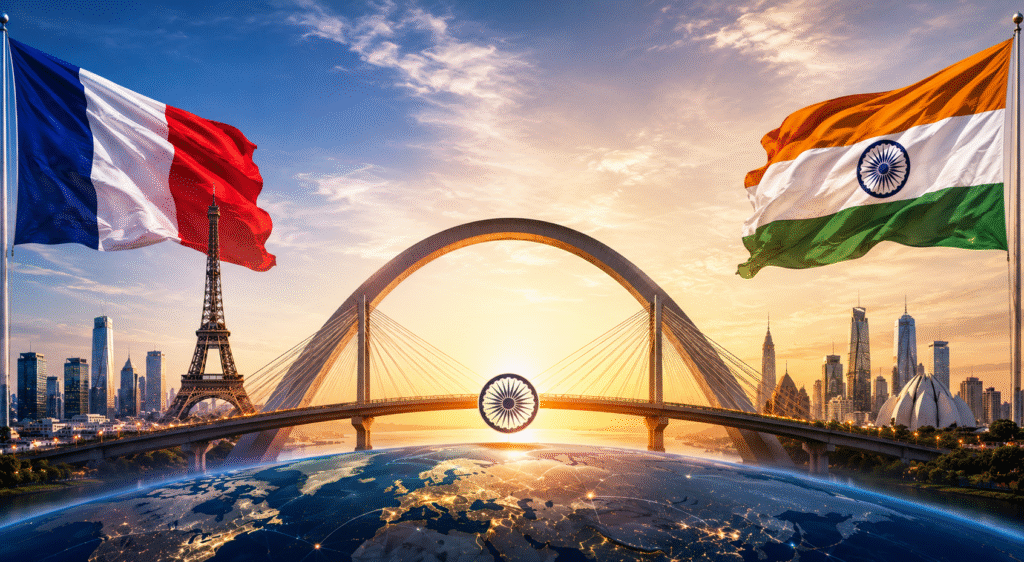
India will assume the BRICS presidency next year. Around the same time, France will chair the G7. On paper, these are routine transitions. Leadership of these forums changes hands periodically. But the timing is interesting.
The global economy is going through a phase where countries are trying to reduce vulnerabilities without reducing engagement. Supply chains are being diversified. Technology partnerships are being reassessed. Capital is becoming more selective. At the same time, nobody wants a world that is divided into competing economic camps. That is where India enters the conversation.
Sitting At An Unusual Intersection
India’s position today is different from what it was even ten years ago. It is a key voice within BRICS. It is also a strategic partner for many Western economies. Indian companies increasingly raise capital globally, manufacture for global markets, and compete with global peers. The economic foundation behind this influence remains strong: India’s economy grew 7.7% in FY2025–26, making it the fastest-growing major economy in the world despite a challenging global environment.
Few large economies are as comfortable operating across multiple circles. This did not happen because of a single policy decision. It is the result of years of economic reforms, diplomatic engagement, and growing market relevance. In my view, this gives India something more valuable than influence. It gives India credibility with different groups that do not always see eye to eye.
The Business Case For Dialogue
When discussions around G7 and BRICS take place, they are often framed as geopolitical events. Businesses see something else. They see investment flows. They see energy partnerships. They see technology access. They see trade opportunities.
If we go by the current share of the world’s population in BRICS economies, it’s over 40%, and they account for one-third of the world’s Gross Domestic Product (GDP). The G7 will tend to dominate areas of global finance, innovation, and investments. In that case, the majority of firms would always want to build stronger ties between ecosystems, rather than maintaining greater distance.
That is why the conversations taking place in 2026 will matter. Not because they will produce dramatic announcements. Most likely, they will not. But because they could influence the direction of economic cooperation at a time when uncertainty remains high.
A Different Test Of Leadership
There was a time when leadership was often measured by a country’s ability to project power. Today, it is increasingly measured by its ability to bring stakeholders together. That is not always visible. It does not generate immediate headlines. Yet it often produces lasting outcomes.
In my view, India’s role in 2026 is not really about taking centre stage. It is about making sure different parts of the world continue talking to one another. That may not generate the biggest headlines, but it could have a lasting impact. Sometimes progress comes from major agreements. Sometimes it comes simply from keeping the door open.
